
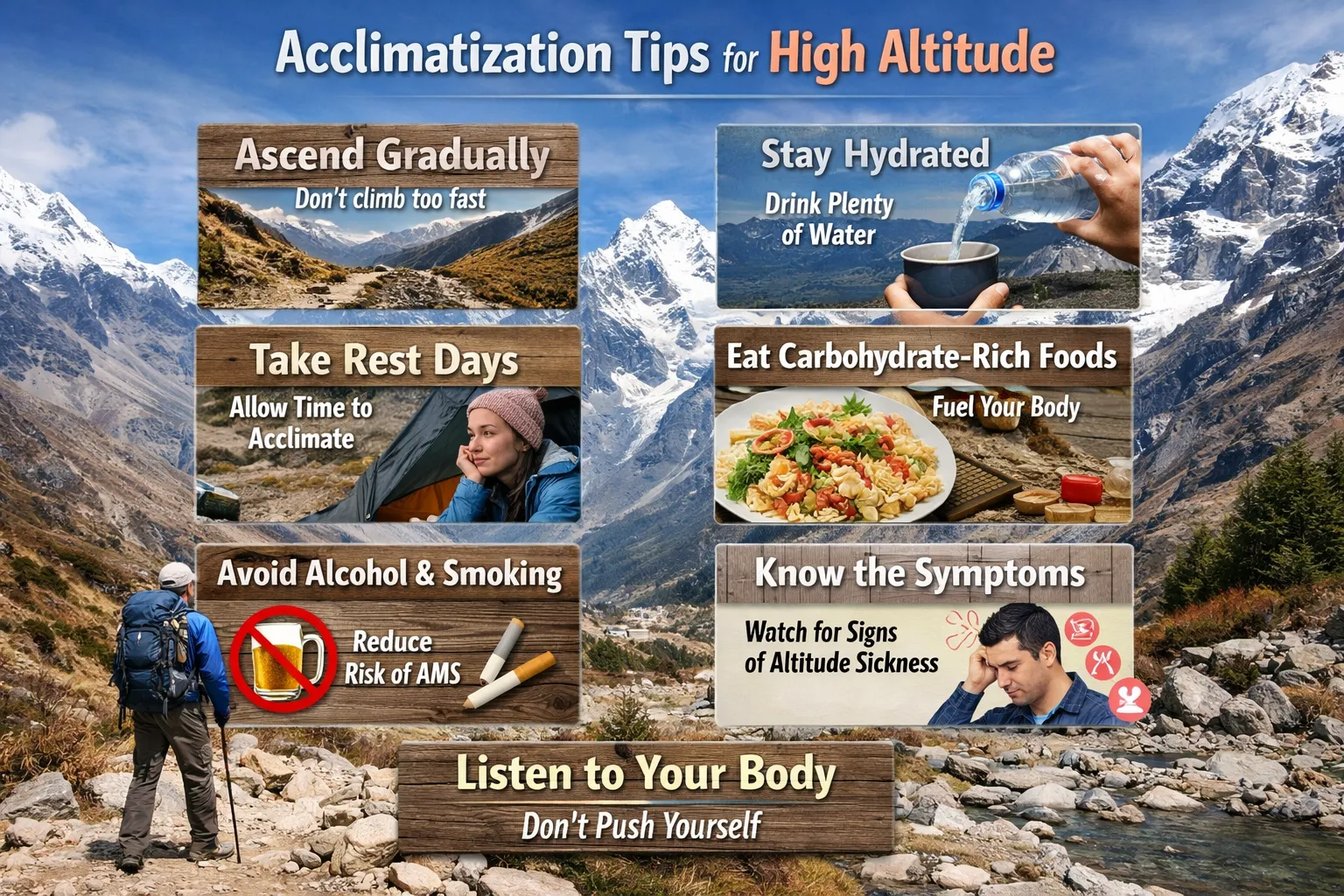
Altitude sickness, or Acute Mountain Sickness (AMS), is the biggest challenge for trekkers in the Himalayas. Here is how you can prepare your body and stay safe during your Gokyo Lakes journey.
1. Walk Slowly (Bistari, Bistari)
In Nepali, 'Bistari' means slowly. This should be your mantra. Even if you feel energetic, keep a steady, slow pace to allow your heart and lungs to adjust to the decreasing oxygen levels.
2. Hydration is Key
Drink at least 3 to 4 liters of water every day. Dehydration can mimic the symptoms of altitude sickness and makes it harder for your body to acclimatize.
3. Climb High, Sleep Low
This is a classic mountaineering rule. During your acclimatization days in Namche and Gokyo, hike to a higher elevation during the day and return to a lower elevation to sleep.
4. Avoid Alcohol and Smoking
Both alcohol and tobacco can dehydrate you and interfere with your breathing, making it much harder for your body to adapt to the altitude.
5. Know the Symptoms
Headaches, nausea, dizziness, and loss of appetite are early signs of AMS. If you experience these, do not go any higher. If symptoms persist or worsen, you must descend immediately.
Ang Rita
A high-altitude guide and passionate storyteller with over 15 years of experience leading treks to the Gokyo Lakes and Everest region.